

By David Halpin – Exercise Physiologist
Introduction
Every day I see athletes walk into Clinic 88 with various lower body injuries. The most common reports are that they cannot isolate one specific reason for the pain, the injury can frustratingly 'move' around the lower limb, and what was initially a niggle has now turned into a chronic injury that keeps reappearing. Rest and recovery methods, such as ice and foam rollers, can assist with the pain, but once the training load increases again, the injury returns. Often, previous therapists have focused on the specific part of the anatomy that is painful, but don't look above and below the site of injury. Is this familiar to you?
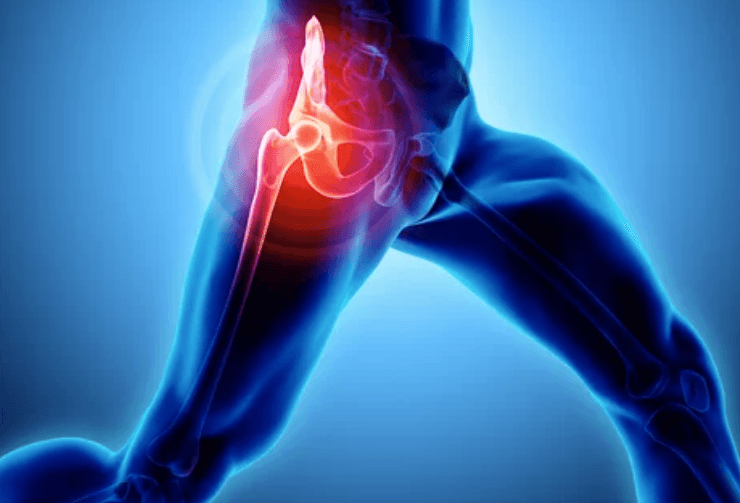
Whether the pain is isolated to the back, or further down towards the feet, the hips are most likely to have influenced the injury.
Compensatory mechanism
During running, there are never two feet on the ground — when moving forward the hip is the fulcrum of the lower body: one leg is driving against the ground to move the body forward, while the opposing leg is stabilising the body. Similarly, during cycling, one side of the body takes on a considerable amount of force, which overloads the muscles on one side, resulting in a considerable force on the hip region to maintain balance. A vast amount of muscles are required for these complicated movements; however, the posterior pelvic muscles and gluteal muscles are essential to achieve hip extension allowing the body to move forward.
The body must react to a variety of forces, and if the muscles are not functioning as required, other muscles will tend to compensate. This results in an altering of the biomechanical setup whereby the propulsive muscles become stabiliser muscles. For example, if the gluteus medius and minimus muscles aren't doing their job (which is to stabilise the pelvis and trunk), often the tensor fasciae latae (TFL) muscle takes the stabilising role, resulting in a pull and irritation of the iliotibial band (IT band). This is known as IT Band Syndrome, which can cause pain anywhere along the IT band – at the hip, and down the side of the leg around the knee.
Impact of reciprocal inhibition
Muscles in the body work in partnership – when one muscle activates, the opposite muscle relaxes to assist a smooth movement. During long periods of sitting, the hip flexor muscles (front of the hip) shorten while the partnered muscles, the hip extensors (gluteus maximus), relax and switch off. Given the amount of time most people spend sitting, we all tend to have overactive hip flexors and relaxed hip extensors. This results in poor posture and slouching.
Not only are the hip flexors over-active and at greater risk of overuse, the de-activated hip extensor muscles cause a reduction in forward propulsion. Furthermore, the de-activated gluteus muscles required for hip rotation tend to lock up the hip capsule, resulting in reduced mobility.
The concern
The change in biomechanics results in reduced running efficiency as the propulsive muscles aren't activating and other propulsive muscles must change priority to stabilise and keep the body upright. Not only does hip instability cause a reduction in efficiency and therefore speed, but it places a considerable load on other muscles and joints resulting in overuse injuries and pain.
How to resolve the condition
Resolving the condition is not as straightforward as reducing the amount of training. Instead, the cause of the hip instability must be addressed. Conducting weighted squats and lunges incorrectly, with poor hip stability, will not fix the problem and will most likely aggravate the condition further.
To fix the condition, a three-step process must be undertaken:
- Mobility – Lengthening the shortened hip flexors, shortening the hip extensors to make activation possible, and creating mobility through the hip capsule.
- Positioning – Mobility will mean that adequate posture can be achieved by positioning the hip into a 'neutral' position.
- Activation – Once the hip and other body parts are positioned correctly, the necessary muscles can activate efficiently (firstly in an unloaded position on the ground, gradually adding loading exercises when ready).
The best initial exercises to conduct include:
- Mobility – Tennis ball & hip flexor stretch
- Positioning – Sit to stand (achieving correct posture) & single leg balance with hands on head
- Activation – Bridge & clam
It is recommended that these exercises be conducted daily (mobility exercises 2–3 times a day) for the first week. After the first week, progressive strengthening exercises should be conducted every second day (double leg bridge progressed to a single leg bridge) and mobility exercises can usually be reduced to every second day. Five minutes of exercises are also beneficial as a warm-up prior to exercise, to achieve adequate hip positioning and assist in muscle activation.
Whether the pain is isolated to the back, or further down towards the feet, the hips are most likely to have influenced the injury.