

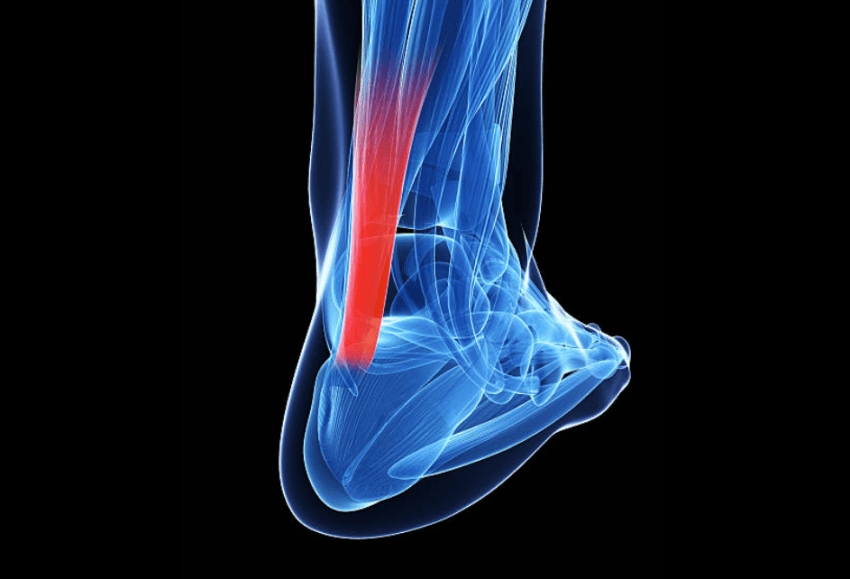

The Achilles is the tendon that attaches the soleus (deep calf muscle) and the gastrocnemius (superficial calf muscle) to the calcaneus (heel bone). It is a thick, cylindrical, easily palpated tendon just above your heel bone. If you palpate the tendon inferiorly (towards the foot), you will notice the tendon blending into the calcaneus to the point where it is difficult to tell what is tendon and what is bone. If you palpate superiorly (upward) you will notice the tendon grows thick and flat as it becomes musculotendinous. Eventually the tendon disappears and the only tissue you will be palpating is the superficial calf – gastrocnemius.
The purpose of any tendon is twofold. The first is to transmit force developed by the attached muscle contraction to enable movement. For the Achilles, this is when the soleus and gastrocnemius concentrically contract, causing the heel to become closer to the back of the knee (toe pointing) as in the exercise heel raises. The other mechanism is to bear load when a muscle is forced to lengthen. For the Achilles this is when the foot hits the ground when running (or walking) and the calf muscles eccentrically contract to soften the heel strike and control movement of the lower leg just after the heel hits the ground.
So what goes wrong with the Achilles? Most runners will have experienced some sort of pain associated with their Achilles. More often than not it will be an acute episode of inflammation that occurs due to tissue damage about the Achilles. It is usually associated with (but not limited to) a palpable nodule on the Achilles that is very sensitive, stiffness initially in the morning but which warms up as you become active, and pain to hop. Hill running will be very difficult. If treated with (but not limited to) rest, anti-inflammatories, ice and treatment, you will recover. If you ignore the pain, the problem can become chronic. The inflammation will disappear but the Achilles will become degenerative. This can lead to the Achilles becoming very thickened and the calf muscles becoming very weak.
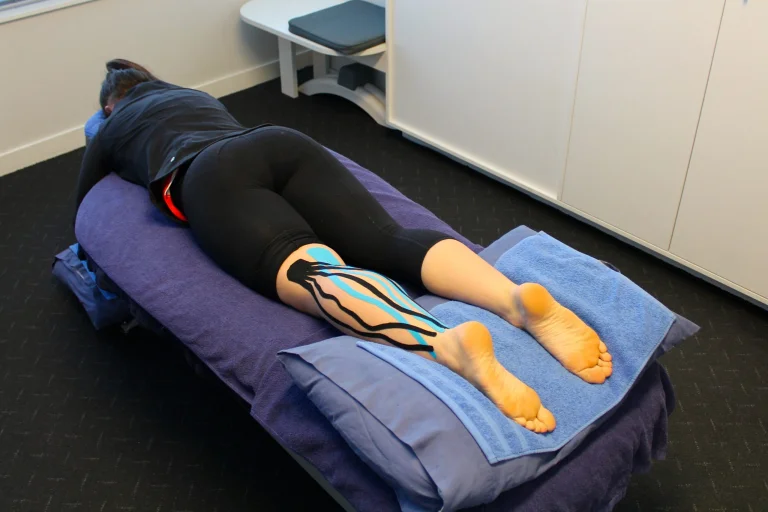
So what causes this? There are numerous causes for Achilles pain. Start by looking at the very obvious. Has your training load increased? Do you have very old worn shoes? Brand new shoes? Camber running or excessive hill running? Has your dorsiflexion range of motion decreased? Have you changed your type of training (track running, flats instead of joggers, spikes, plyometrics are all examples of what often cause acute onset Achilles pain)? You can often self-assess and figure out what is causing your pain. Change these immediately. If you can't see anything obvious then make a visit to your health practitioner.
What can you do? For acute onset of Achilles pain, try to assess what has caused your pain and change that immediately. For the Achilles itself, ice the affected area, put a heel raise in your shoe for a few days to take the load off the Achilles, cross train and gently mobilise the Achilles. How to mobilise? Pincer grip (grip with forefinger and thumb) just below and just above the nodule on the Achilles, or at least the most painful portion, and bend the Achilles back and forward. Do this for a couple of minutes at a time, three to four times a day. This will often decrease the amount of pain felt when hopping and walking and promote recovery.
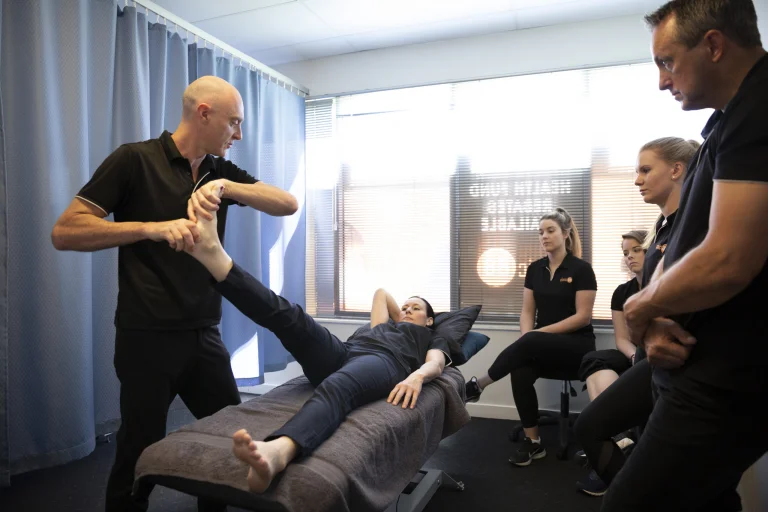
For chronic Achilles pain, eccentric calf exercises are the most important part of treatment. The concept is to put load through the Achilles (which is now devoid of inflammation and becoming degenerative), cause a healing inflammatory response, and lay down more healthy connective tissue to heal the tendon. How to do this? Stand on a step, heel raise on both legs, now with your body weight on the painful side, slowly allow your heel to drop below the step height, and repeat. For a hypothetical set, try three sets of six to begin with. Be prepared for the Achilles to initially become more painful. This will subside and slowly the Achilles will become less painful and your typical signs and symptoms will decrease. By all means, please consult your health practitioner if you need direction.
To prevent Achilles pain, be careful with major changes to your training method and load. Also, do preventative exercises as suggested above, including Achilles mobilisation.
Happy running.